


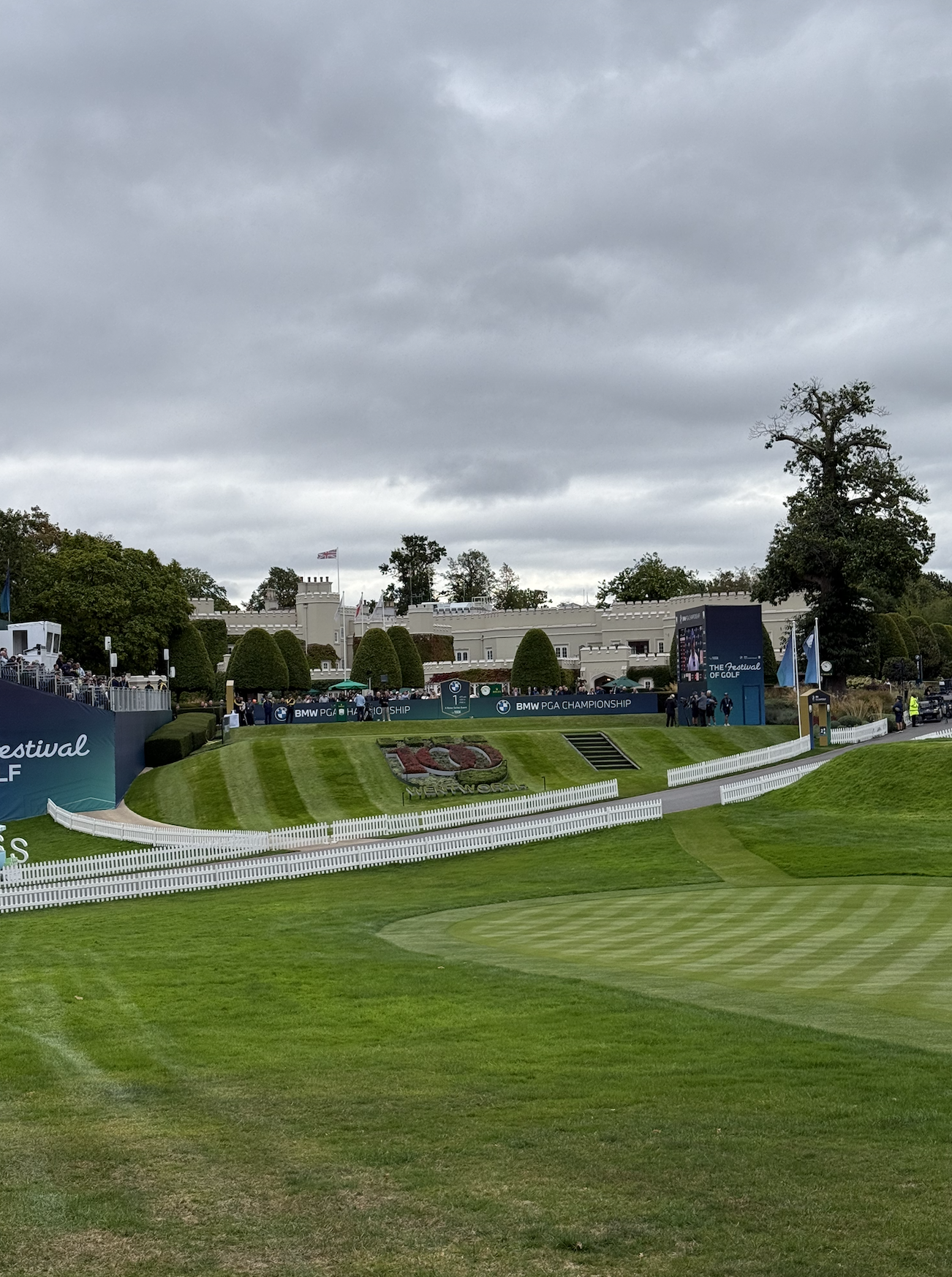
On Sunday afternoon, thousands of spectators surrounded the 18th green at Wentworth as some of the biggest names in world golf battled for the BMW PGA Championship.
J.J. Spaun emerged victorious, producing a brilliant finish with four birdies in his final five holes to win by two shots over Rory McIlroy, Adam Scott, Aaron Rai and Manuel Elvira.
When you look across the field at Wentworth, you will find players from all over the world who took very different routes into professional golf. For a significant number of them, one of the most important stages of that journey was US college golf.
From major champions to Ryder Cup players and DP World Tour winners, the BMW PGA Championship offered another reminder that college golf is no longer simply an alternative to turning professional. For many of the world's best players, it has become part of the pathway.
The most obvious example came from the winner himself.
Before becoming a US Open Champion and lifting the BMW PGA Championship trophy at Wentworth, J.J. Spaun played college golf at San Diego State University. Spaun turned professional in 2012, but his route to the top was far from immediate. He competed on PGA Tour Canada and the Korn Ferry Tour before eventually earning his PGA Tour card. His victory at Wentworth is another example of just how far the college golf pathway can lead.
It is also an important reminder that development does not happen at the same speed for every player. College golf provides an environment to compete, develop and prepare for the professional game, but the journey that follows can take many different forms.
Sweden's Ludvig Åberg arrived at Texas Tech University as one of Europe's most promising young golfers. By the time he left, he had developed into the number one player in PGA Tour University, earning direct PGA Tour membership in 2023.
His rise following college was remarkable, but the foundations were built during four years competing at Texas Tech. Åberg won eight times during his college career, became one of the world's leading amateur players and developed in one of the most competitive environments in amateur golf.
Similarly, Norway's Viktor Hovland also went through the college route. He spent three seasons at Oklahoma State University, becoming a two-time First-Team All-American and reaching number one in the World Amateur Golf Ranking. While still an amateur, he won the 2018 U.S. Amateur and competed in both the Masters and U.S. Open before turning professional in 2019.
Both Åberg and Hovland arrived in America as talented European juniors. Both left college prepared to compete at the highest level of professional golf.
The same pathway is increasingly familiar to British players.
Sheffield's Alex Fitzpatrick spent four years at Wake Forest University in North Carolina before turning professional in 2022. During that period he competed against some of the strongest amateur players in the world while combining elite golf with university life in the United States.
Cornwall's Harry Hall took a similar route at the University of Nevada, Las Vegas. Hall played four years of college golf at UNLV before turning professional in 2019, progressing through the Korn Ferry Tour and eventually earning his PGA Tour card.
Their journeys demonstrate something particularly important for young British golfers considering America.
Moving to the United States for college does not mean leaving European golf behind. Instead, it can provide another route towards it.
A junior golfer can develop in the UK, move into the US college system, compete against elite international players and then return to compete professionally in Europe or pursue opportunities on the PGA Tour and its developmental tours.
The growth of PGA Tour University has understandably created a huge amount of attention around the direct pathway from college golf to the PGA Tour. But the BMW PGA Championship highlights the bigger picture. College golf is about preparing players for professional golf, not simply preparing them for one particular tour.
European players who head to America gain access to high-level coaching, strength and conditioning, practice facilities, competitive schedules and regular tournament golf while completing a university degree.
They also learn to travel, manage their schedules, compete as part of a team and adapt to life away from home; experiences that can become invaluable if they eventually enter professional golf.
For a young golfer standing outside the ropes at Wentworth this weekend, the distance between junior golf and competing alongside the world's best can feel enormous. But every player inside those ropes once faced decisions about what came next.
For a growing number of talented golfers from the UK and Europe, US college golf is becoming part of that answer. The players competing at Wentworth demonstrate that there is no single route into professional golf. Some turn professional as teenagers. Some progress through amateur golf in Europe. Others spend several years developing at an American university before taking their next step.
The important thing is finding an environment that gives you the best opportunity to develop both as a golfer and as a person.
US college golf can provide exactly that.
Ready to start your journey?
Contact Study & Play America today to learn more about how US college golf could become part of your pathway.
Apply today to see if you're eligible for a sports scholarship in the USA. Unsure? Request a call with a member of our team today!
